2026年5月27日,2026国际文化经济学会(ACEI)学术论坛第四分会场于西安建筑科技大学雁塔校区意诚科创中心4楼创新会议室成功举办。本次分会场聚焦人文经济学前沿、文化数字化转型、文明互鉴实践等核心议题,以“数字产业升级与中外文化交流”为主题,汇聚北京大学、西安交通大学、西南大学、澳门城市大学、陕西省社会科学院等高校及科研院所的专家学者,开展跨学科深度研讨,共探人文经济与数字时代融合发展新路径。
May 27, 2026 – The fourth parallel forum of the 2026 Academic Conference of the Association for Cultural Economics International (ACEI) was successfully held in the Innovation Conference Room, 4th Floor, Yicheng Science and Innovation Center, Yanta Campus of Xi’an University of Architecture and Technology. Focusing on core topics including frontiers of humanistic economics, cultural digital transformation, and practices of inter-civilizational dialogue, the forum adopted the theme Digital Industrial Upgrading and China-Foreign Cultural Exchange. It gathered experts and scholars from prestigious universities and research institutions, including Peking University, Xi’an Jiaotong University, Southwest University, City University of Macau, and Shaanxi Academy of Social Sciences, to conduct in-depth interdisciplinary discussions and jointly explore new pathways for the integrated development of humanistic economics in the digital era.
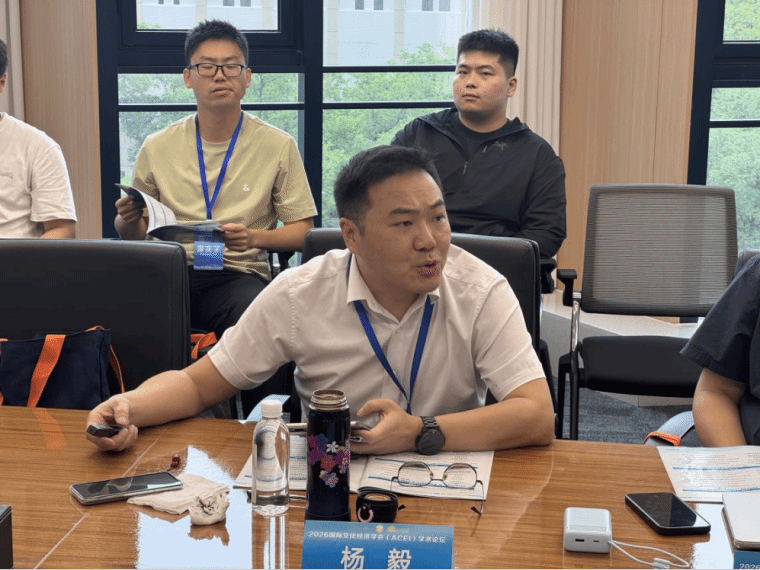
主持人兼点评嘉宾:杨毅教授(西南大学)
Professor Yang Yi, Southwest University
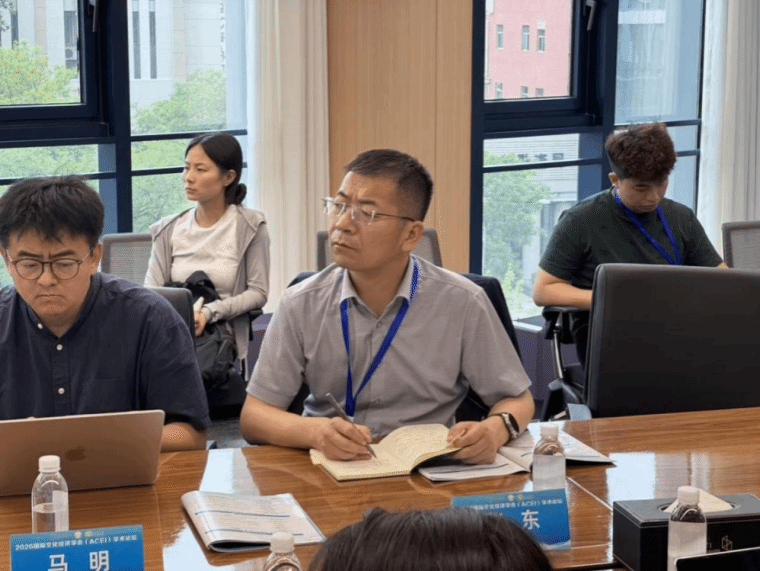
主持人兼点评嘉宾:赵东研究员(陕西省社会科学院)
Research Fellow Zhao Dong, Shaanxi Academy of Social Sciences
分会场上半场由西南大学杨毅教授、陕西省社会科学院赵东研究员担任主持人兼点评嘉宾,学术氛围浓厚、交流深入。杨毅教授率先作主题发言,以景德镇陶溪川跨文化合作为切入点,系统阐释人文经济触发中外文明互鉴的内在机理与实践路径,提出人文经济是文化与经济价值“互嵌共生”的文明形态,从微观、中观、宏观三层拆解互鉴逻辑,并给出文化IP构建、跨文明产业链培育、文化主体性坚守三大实践建议,引发与会学者强烈共鸣。赵东研究员以“宏大、深邃、时尚”为关键词点评,肯定研究的学术新颖性与理论支撑力。
The first half of the parallel forum was moderated and reviewed by Professor Yang Yi (Southwest University) and Research Fellow Zhao Dong (Shaanxi Academy of Social Sciences), featuring a rigorous academic atmosphere and in-depth exchanges. Professor Yang Yi delivered the opening keynote speech, taking cross-cultural cooperation at Jingdezhen Taoxichuan as an entry point. He systematically elaborated on the internal mechanisms and practical paths through which humanistic economics catalyzes inter-civilizational dialogue between China and foreign countries, defining humanistic economics as a civilizational form characterized by the inter-embedding and symbiosis of cultural and economic values. He deconstructed the logic of inter-civilizational learning at micro, meso, and macro levels, and put forward three practical recommendations: cultural IP construction, cross-civilizational industrial chain cultivation, and adherence to cultural subjectivity, resonating strongly with participating scholars. Research Fellow Zhao Dong commented with the keywords “grand, profound, and fashionable,” affirming the academic novelty and theoretical robustness of the research.
随后,北京大学向勇教授团队张亚欧博士后、胡瑞硕士分享联合国教科文组织乡村创意教育实践成果,聚焦印尼玛琅“世界媒体艺术之都”乡村振兴探索,展现青年力量赋能全球乡村可持续发展的中国经验;澳门城市大学马明教授发布国有文艺院团抖音传播实证研究,基于499家院团、近两万条视频数据,揭示数字传播两极分化、后台内容价值被低估、制度资本难以直接转化为传播优势等核心发现,为文艺院团数字化转型提供数据支撑;陕西省社会科学院赵东研究员系统梳理AIGC发展脉络,归纳人机共创、创作平权化、IP价值放大等五大趋势,提出技术攻关、版权治理、人才培育等针对性对策;西安交通大学王冯帆博士构建文化产业数字化价值创造分析框架,理清IP转化、精神价值生成等五重逻辑,描绘产业循环反馈的价值体系。
Subsequently, Postdoctoral Fellow Zhang Ya’ou and Master’s candidate Hu Rui from Professor Xiang Yong’s team at Peking University shared the practical outcomes of the UNESCO Chair in Rural Creative Economy. Focusing on rural revitalization practices in Malang, Indonesia—a UNESCO City of Media Arts—they presented Chinese experiences of empowering global rural sustainable development through youth engagement.
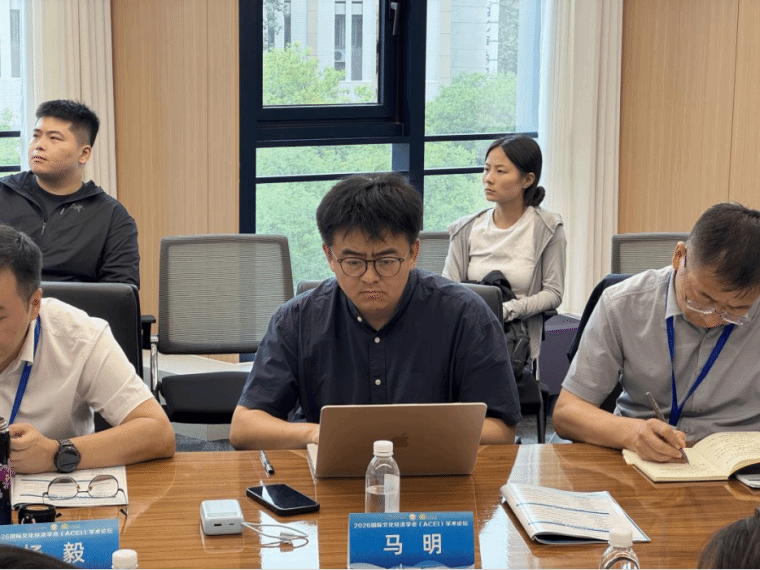
主持人兼点评嘉宾:马明教授(澳门城市大学)
Professor Ma Ming, City University of Macau
下半场研讨由马明教授主持并点评,多位青年学者聚焦数字人文、遗产保护、AI重构产业价值等议题分享前沿成果。陕西师范大学李兆宇展示敦煌吐鲁番文书智能检索系统“Orin”,推动古代文献开放共享;西安建筑科技大学李振江运用机器学习方法,识别数字技术赋能遗产保护的高效模式;西安交通大学薛明翰以番茄小说、星野平台为案例,揭示生成式AI重构数字文化平台价值逻辑的核心机制。
Professor Ma Ming from City University of Macau released empirical research on Douyin communication by state-owned artistic troupes. Based on data from 499 troupes and nearly 20,000 videos, the study revealed key findings including the polarization of digital communication, undervaluation of backend content value, and the difficulty in translating institutional capital into communication advantages, providing data support for the digital transformation of artistic troupes.
Research Fellow Zhao Dong from Shaanxi Academy of Social Sciences systematically reviewed the development trajectory of AIGC, summarized five major trends—human-machine co-creation, democratized creation, and amplified IP value—and proposed targeted countermeasures for technological breakthroughs, copyright governance, and talent cultivation.
Dr. Wang Fengfan from Xi’an Jiaotong University constructed an analytical framework for value creation in the digital cultural industry, clarifying five layers of logic including IP transformation and spiritual value generation, and delineated the value system of industrial circular feedback.
The second half of the discussion was moderated and reviewed by Professor Ma Ming, with numerous young scholars sharing cutting-edge findings on digital humanities, heritage preservation, and AI-driven industrial value reconstruction. Li Zhaoyu from Shaanxi Normal University demonstrated “Orin,” an intelligent retrieval system for Dunhuang and Turfan documents, advancing the open sharing of ancient literature. Li Zhenjiang from Xi’an University of Architecture and Technology employed machine learning to identify efficient models for empowering heritage preservation through digital technologies. Xue Minghan from Xi’an Jiaotong University, taking Tencent Literature’s Tomato Novel and Xingye Platform as cases, revealed the core mechanisms through which generative AI reconstructs the value logic of digital cultural platforms.
本次分会场研讨历时近三个小时,议题覆盖人文经济理论建构、国际乡村实践、文艺数字化、AIGC应用、遗产数字人文等多元领域,充分彰显文化产业学科交叉融合的创新活力。与会专家围绕宏观理论构建、实证方法创新、学术与实践转化协同等议题坦诚交流,为人文经济学发展、文化产业数字化升级提供了新思路、新范式,助力中外文明交流互鉴与文化高质量发展。
Lasting nearly three hours, the parallel forum covered diverse fields including the theoretical construction of humanistic economics, international rural practices, artistic digitalization, AIGC applications, and digital humanities for heritage preservation, fully demonstrating the innovative vitality of interdisciplinary integration in cultural industry studies. Participants engaged in candid exchanges on macro theoretical construction, empirical methodological innovation, and synergies between academic research and practical transformation, offering new perspectives and paradigms for the development of humanistic economics and the digital upgrading of the cultural industry, and contributing to inter-civilizational dialogue between China and foreign countries as well as high-quality cultural development.



